
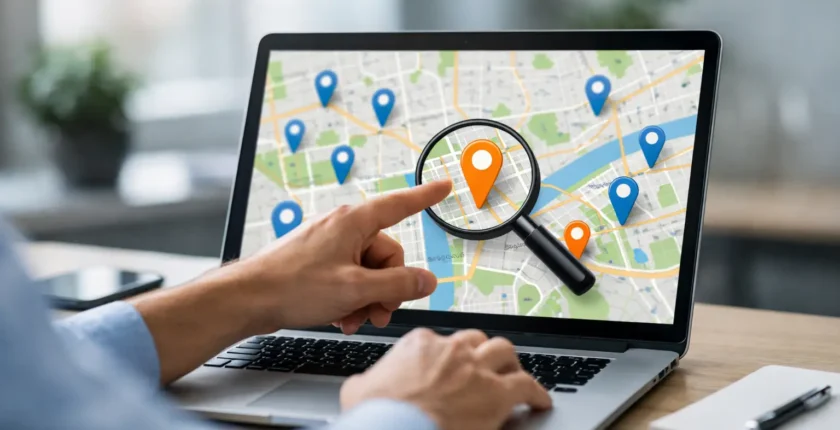
How Interactive Job Map Search Speeds Hiring
A job title can look perfect until the commute, work setup, or location tells a different story. That is why interactive job map search matters. It adds context that a basic keyword list cannot show, helping candidates spot where opportunities are clustered and helping employers reach people who are actually willing and able to work in that area.
For job seekers, speed matters, but so does fit. A map-based experience makes it easier to compare jobs by distance, city, region, or remote availability without opening dozens of tabs. For employers, it improves visibility in the places where talent is searching and gives job posts a more practical edge. Instead of competing in a long text feed alone, a role can appear where a candidate is already focused geographically.
What interactive job map search actually changes
Traditional job search is built around text fields. You type a role, add a city, and scroll through listings that may or may not match how you want to work. That model still works, especially for broad exploration, but it can create friction when location is a deciding factor.
Interactive job map search changes the order of discovery. Instead of starting with a long list, candidates can start with place. They can zoom into a city, compare nearby openings, and quickly tell whether a role sits in a business district, a suburban office corridor, or a broader regional hiring zone. That visual layer helps people make faster calls on relevance.
This is especially useful for users balancing more than one requirement. A nurse looking for a shorter commute, a software engineer open to hybrid work, or a freelancer trying to find project-based opportunities in a specific metro area all benefit from seeing geography and role type together. It saves time because the search reflects real-world constraints, not just keywords.
Why candidates use interactive job map search
Candidates do not search in a vacuum. They search around school pickups, relocation plans, visa limitations, public transit routes, and preferred work models. A map makes those constraints easier to work with.
A text listing might say a role is in Dallas, but that could mean downtown, a northern suburb, or a location far outside a candidate’s practical commute. On a map, the difference is immediate. That clarity helps users avoid wasted applications and spend more energy on roles that make sense.
There is also a confidence factor. When candidates can see where opportunities are concentrated, they get a more realistic read on the market. If openings are clustered in one part of a city, that may influence whether they adjust their radius, focus on hybrid roles, or look for remote alternatives. Good search tools should not just show jobs. They should help users make better decisions.
For early-career professionals and career switchers, this can be even more valuable. They may be exploring several industries at once and trying to understand where hiring is active. A visual search experience lowers the barrier. It turns abstract market data into something practical and easy to act on.
The map is not just about nearby jobs
One common mistake is treating map search as useful only for local, in-person work. In practice, it can support multiple job models. Hybrid roles still have a physical anchor, even if attendance is limited. Regional field jobs depend heavily on territory. Freelance and contract work can be tied to client locations or service areas. Even remote roles can be searched alongside location-based roles so candidates can compare options in one workflow.
That matters because work is no longer neatly split into office versus remote. Many candidates want flexibility, not a single format. A strong map search experience supports that reality instead of forcing users into a narrow filter path.
How employers benefit from interactive job map search
Employers often focus on the application process, which makes sense, but discovery is just as important. If qualified candidates do not find the role quickly, the rest of the hiring funnel never starts.
Interactive job map search improves discovery by matching how many people naturally evaluate jobs. When a post appears in a visible, accurate location, it becomes easier for local talent to assess it right away. That can improve click quality because the candidate has already cleared one of the biggest fit questions: where the work happens.
It can also help employers hiring across multiple branches or service areas. A company with roles in Houston, Riyadh, Dubai, or several smaller markets does not need candidates to guess where demand exists. A map-led experience makes hiring footprints visible. That is useful for growing businesses that need to fill roles across regions without creating unnecessary confusion.
There is another advantage: smaller employers can compete more effectively. Large brands often dominate standard keyword search because of volume and recognition. On a map, relevance can matter more. If a candidate is searching in a specific area, a local company with a well-positioned opening has a stronger chance of being noticed.
Accuracy matters more than novelty
A map feature sounds modern, but its value depends on execution. If locations are vague, outdated, or misleading, trust drops fast. Employers need to be precise about office sites, service territories, and whether a role is truly onsite, hybrid, or remote. Candidates are quick to notice when a posting says one thing and the workflow reveals another.
That trade-off matters. A detailed map experience can improve targeting, but only if the data behind it is clean. Otherwise, employers may get more views but weaker applications, and candidates may leave frustrated. Good hiring technology is not about adding features for appearance. It is about reducing friction in ways users can feel immediately.
Where map-based search works best
Not every search starts with geography. Some candidates care more about title, pay range, or industry than exact location. That is why map-based search should complement advanced search, not replace it.
It tends to work best when location influences daily life or decision speed. Healthcare, logistics, education, retail, automotive, and legal support roles often benefit from geographic clarity. So do freelance assignments that require local presence. Hybrid knowledge work also fits well because candidates want to measure the real cost of occasional office visits.
For fully remote roles, map search is less about commute and more about eligibility, time zone, and employer base. In those cases, users may still want to browse by market, especially if they are targeting companies in a particular city or region. It depends on the search goal. Some users want the closest opportunity. Others want access to a specific hiring market.
What candidates should look for in a strong map search experience
The best interactive job map search tools do more than pin jobs on a screen. They let users move quickly between visual browsing and practical filtering. If the map does not connect smoothly with job type, work model, industry, or keyword filters, it becomes a novelty rather than a useful hiring tool.
Candidates should expect the basics to work cleanly. Pins should reflect real locations or clearly defined remote status. Search radius should be adjustable. Switching between map and list views should feel natural. Most importantly, the map should help narrow decisions, not create extra clicks.
A useful platform also respects how people search over time. Someone may start broad, save a few target areas, then return later with tighter filters. That is where dashboards, alerts, and saved searches become powerful companions to map-based browsing. A good experience supports momentum instead of making users repeat the same work.
Why this matters in a faster hiring market
Hiring speed is now part of the candidate experience. If people cannot understand where a job is, how it fits their preferred work style, or whether it is worth pursuing, they move on. The same is true for employers. If openings are hard to discover or location details are unclear, quality applicants drop off before the first conversation.
That is why platforms like JobRope put practical search tools at the center of job discovery. Interactive job map search is not about decoration. It helps candidates find the right fit faster and gives employers a clearer path to the talent they want to reach.
The real value is simple: when job search reflects how people actually make decisions, better matches happen sooner. If you want less scrolling and more relevant opportunities, start with the map and let the search work the way your life already does.
